AI is ready to tackle your technical accounting IPO prep
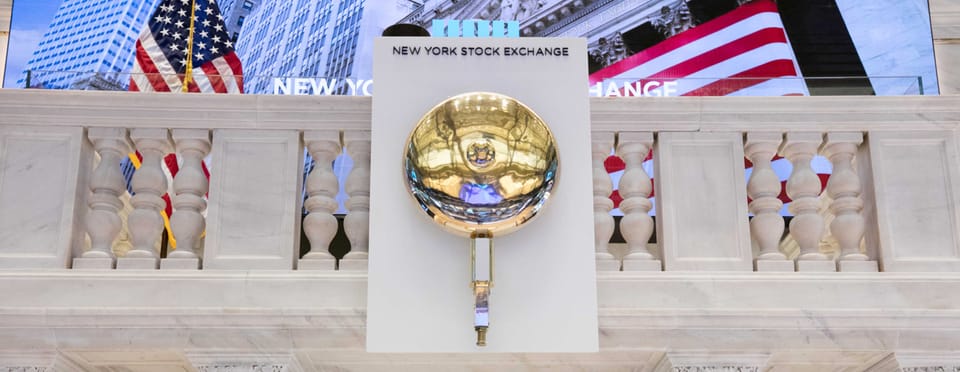
For CFOs and Controllers navigating the path to public markets, the technical accounting workload alone can feel like a full-time job on top of a full-time job. The right AI tools change that.
The Hidden Complexity Inside Every S-1
Going public is one of the most scrutinized financial events a company will ever undertake. By the time your S-1 hits the SEC's desk, every revenue recognition policy, every lease, every complex equity arrangement, and every material contract has to be identified, analyzed and disclosed with precision. Auditors will test it. SEC reviewers will comment on it. Investors will read it.
The problem? Most companies approaching an IPO don't have the internal technical accounting horsepower to handle all of that — at least not quickly, and not at the volume the process demands. Controllers and CFOs end up managing a sprawling, fragmented process: contracts piling up for manual review, junior staff struggling to draft technically sound memos, advisors billing by the hour, and deadlines compressing from every direction.
That's the exact problem UpDraft was designed to solve.
What Makes IPO Technical Accounting So Demanding
Before understanding how UpDraft helps, it's worth naming what makes S-1 preparation so uniquely taxing from a technical accounting standpoint.
Volume and variety. An IPO-stage company typically needs to work through a large inventory of accounting issues simultaneously — revenue recognition under ASC 606, stock-based compensation under ASC 718, leases under ASC 842, business combinations, debt instruments, convertible notes, warrants, earn-outs, and more. Each one requires its own research, analysis, and documented conclusion.
Complex agreements. Many of the accounting determinations hinge on the precise terms buried inside legal contracts. A single convertible note or revenue arrangement can require hours of careful contract review before any accounting analysis even begins.
SEC-specific disclosure requirements. It's not enough to get the accounting right in your books. You also have to present it correctly in the registration statement — with disclosures that are complete, consistent, and capable of surviving an SEC comment letter.
Audit trail expectations. Your external auditors and the SEC both expect to see the work behind every conclusion. That means well-structured, well-cited technical accounting memos — not just a number on a spreadsheet.
Speed and resource constraints. Most companies going through IPO prep don't have a deep bench of technical accounting specialists. The work gets pushed onto finance teams already stretched thin, or outsourced to advisors at a significant cost.
Purpose-Built for High-Volume Technical Accounting Work
UpDraft is an AI platform built specifically for technical accounting — not adapted from a general-purpose tool, but designed from the ground up by accounting subject matter experts who have lived this work firsthand.
At its core, UpDraft does four things that matter enormously to any CFO or Controller preparing for an IPO: it helps you identify every technical accounting issue that needs to be addressed, plan your approach to each one, analyze the relevant accounting standards and contract terms, and document your conclusions in audit-ready memos.
1. Identify: Surface Every Issue Before It Surfaces You
One of the most dangerous moments in IPO preparation is the technical accounting issue you didn't see coming. A revenue arrangement that should have been reported net instead of gross. A warrant that needed to be classified as a liability. A lease commitment that required a right-of-use asset. If not identified in a timely manner, issues like these can be a nightmare, delay your filing, or invite SEC scrutiny.
UpDraft's specialized AI agents are trained on the full landscape of technical accounting standards so they can help your team systematically work through a company's contracts, arrangements, and transactions to identify what needs to be analyzed. Rather than relying on an individual's knowledge of what to look for, UpDraft brings a consistent, comprehensive lens to the identification process.
The platform's knowledge base consolidates over 400 sources of accounting and regulatory guidance — including FASB, SEC regulations, PCAOB standards, and interpretive guidance from the major accounting firms — into a knowledge base that informs UpDraft's AI agents. That means nothing gets missed because someone forgot to check a particular standard.
2. Plan: Build a Structured Technical Accounting Roadmap
Knowing what issues exist is only half the battle. IPO preparation requires a coordinated, prioritized plan for working through each one — especially when your timeline is fixed and your resources are finite.
UpDraft helps teams build structured workflows for each technical accounting area. These aren't generic checklists. They're configurable, repeatable analysis frameworks that guide users step-by-step through the right questions, the right sources, and the right documentation format for each type of issue. Admins can set and standardize workflows across the team, ensuring consistency regardless of who is doing the work.
This is particularly valuable for CFOs who are managing a mix of experienced advisors and junior staff during IPO prep. With UpDraft, a less experienced team member isn't starting from scratch or guessing at the right approach — they're working within a structured framework that keeps them on track and reduces the risk of missed steps.
3. Analyze: Deep Technical Analysis at Dramatically Higher Speed
This is where UpDraft's multi-agent AI architecture makes a tangible difference.
When a technical accounting issue involves a complex contract — a revenue arrangement, a convertible instrument, a lease agreement, a business combination — the first task is extracting the commercially and financially relevant terms. Traditionally, that means hours of manual contract review: reading dense legal language, identifying key provisions, and building a matrix of terms that will drive the accounting analysis.
UpDraft automates that process. Upload a contract, and UpDraft's AI agents read and analyze it from a technical accounting perspective — extracting key terms, flagging provisions that have accounting significance, and organizing findings into a structured key term matrix. Users routinely see this step, which might have taken half a day manually, completed in a fraction of the time, with reported accuracy rates around 95%.
From there, UpDraft's agents bring the full weight of its knowledge base to bear on the accounting analysis. Need to determine the appropriate classification of a convertible note under ASC 470 and ASC 815? UpDraft can walk through the analysis, citing the specific guidance that applies. Working through the variable consideration framework under ASC 606 for a complex revenue arrangement? Same approach — grounded in authoritative sources, with citations you can follow.
The multi-agent design means different agents handle different parts of the workflow — one focused on contract analysis, another on research, another on memo drafting — with each checking the other's work. This structure improves accuracy and significantly reduces the errors that tend to creep in when a single model is asked to do everything at once.
The result is that technical accounting work that previously took a senior specialist 12 to 18 hours can often be completed in 2 to 3 hours. For an IPO process that might involve dozens of discrete accounting issues, that efficiency compounds quickly.
4. Document: Audit-Ready Memos, Automatically
For SEC reporting purposes, the accounting conclusion is only as valuable as the documentation behind it. A technical accounting memo for an IPO needs to be structured, thorough, properly cited to authoritative guidance, and defensible under audit scrutiny.
Writing memos at this standard, for every issue across the IPO inventory, is enormously time-consuming — and it's typically the work that junior staff struggle with most, since it requires not just knowing the answer but knowing how to frame it in the right format with the right citations.
UpDraft handles memo drafting as a core capability. Once the contract analysis and technical research are complete, the platform can generate a structured technical accounting memo — organized the way your auditors and reviewers expect to see it, with citations drawn directly from the knowledge base, and formatted for easy review and finalization.
This doesn't replace the expert judgment of your technical accountants. UpDraft is designed to be a glass-box tool — transparent about its reasoning, with a full audit trail of every source it consulted and every step it took — so your team can review, refine, and stand behind the output. Think of it less as automation that replaces your accountants, and more as a highly capable research and drafting partner that lets them work at a level they simply couldn't sustain manually.
The Disclosure Layer: Benchmarking and SEC Comment Readiness
Beyond the core memo work, IPO preparation also requires getting your financial statement disclosures right — the notes to the financial statements, the MD&A, the critical accounting estimate disclosures. These need to be complete, consistent with your accounting policies, and calibrated to what the SEC expects to see from a company in your industry and stage.
UpDraft searches EDGAR to see how comparable public companies have disclosed similar accounting matters, and use that context to ensure their own disclosures are appropriately complete and defensible. For teams worried about SEC comment letters — a very real concern during the IPO review process — this kind of benchmarking intelligence is invaluable.
What This Means for CFOs and Controllers
If you're a CFO or Controller managing an IPO process, the practical implications of UpDraft are significant.
You can reduce your reliance on expensive external advisors for the research and drafting work that makes up a large portion of technical accounting engagements without sacrificing quality or completeness. UpDraft positions itself as a fractional technical accounting capability that costs a fraction of what you'd pay an advisory team for the same volume of work.
You can bring more of the work in-house — with confidence that your team has the tools and guardrails to do it correctly. UpDraft's structured workflows and knowledge base mean that even team members who aren't technical accounting specialists can contribute meaningfully to the process, under the oversight of your senior people.
You can move faster — which matters enormously when your IPO timeline is set and your S-1 has to be filed. Compressing the technical accounting workstream by 50% to 75% can meaningfully accelerate your overall readiness timeline.
You have a defensible record. Because UpDraft maintains a full audit trail of every analysis — the sources consulted, the steps taken, the conclusions reached — your team walks into conversations with auditors and SEC reviewers with comprehensive documentation rather than reconstructed memories.
Built by People Who Have Done This Work
What sets UpDraft apart from general-purpose AI tools is our proprietary document analysis and multi-agent system - it's the expertise baked into the platform. UpDraft was built by technical accounting subject matter experts who have worked the high-volume, high-stakes engagements that IPO preparation demands. The workflows, the knowledge base, the agent logic — all of it reflects hard-won, real-world experience with the kind of work you're actually trying to get done.
That's why companies preparing for public markets are turning to UpDraft to manage their technical accounting workload. Not as a replacement for human expertise, but as the most powerful tool available for putting that expertise to work.
Ready to See How UpDraft Can Support Your IPO Readiness?
If you're in the early stages of IPO preparation or worried about falling behind schedule we'd welcome the conversation.
UpDraft offers a 30-day risk-free trial. There's no better way to understand what the platform can do for your team than to put it to work on your actual issues.
UpDraft is a technical accounting AI platform built for finance teams navigating complex accounting and disclosure requirements. Learn more at tryupdraft.com.